Why Most AI Tools Aren't Safe for Children, And What Cova Does Differently
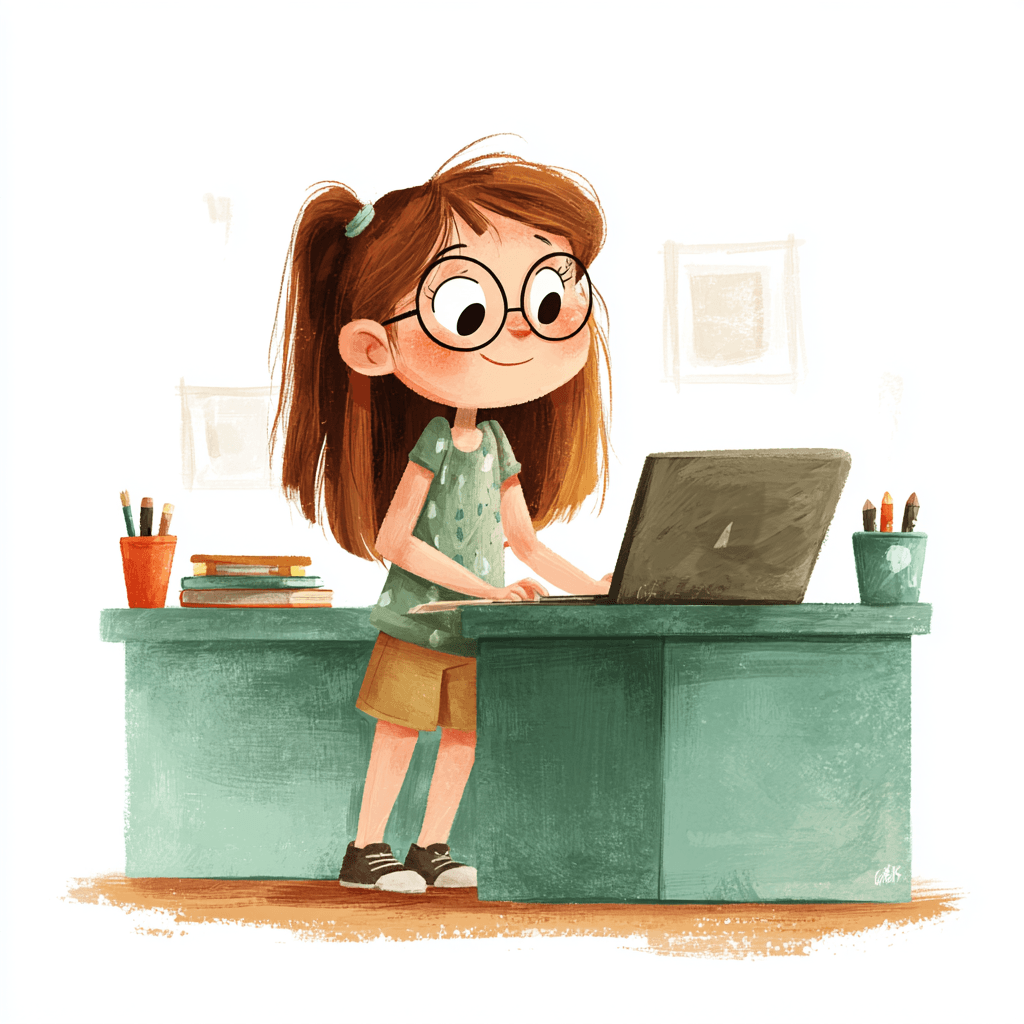
Children as young as six are using AI tools built for adults · tools with no age filters, no parental oversight, and no understanding of what’s appropriate for a curious seven-year-old to read, hear, or explore. These tools are smart, capable, and completely indifferent to who is on the other side of the keyboard.
We didn’t build Cova because AI is dangerous. We built it because the default is dangerous· and that’s a problem with a real solution.
What “safe by default” actually means
Most AI assistants are trained for adults. Child safety, if it exists at all, is typically a thin layer added afterwards: a keyword blocklist, a disclaimer, a setting buried three menus deep.
That distinction matters enormously. A keyword blocker stops a child from typing a bad word. A genuine child-safety model understands that “what happens if you stop eating?” could mean a biology question, something a friend mentioned, or something a parent needs to know about · and responds accordingly. Safety isn’t a feature you bolt on. It’s a decision you make on day one.
The gaps we kept seeing
Before building Cova, we spent months talking to parents, educators, and child development experts. The same gaps came up every time:
- No age awareness. Generic AI gives the same depth of answer to a 7-year-old and a 35-year-old. Vocabulary, complexity, and tone all need to shift for younger users.
- No parent visibility. No log, no summary, no alert · parents are completely in the dark about what their child is exploring.
- No jailbreak protection. Children quickly learn that clever wording can bypass filters · role-play framing, fictional characters, gradual escalation. Most tools have no defence, and no way to alert parents when a child is actively testing the system.
How Cova is built differently
Every feature in Cova starts with a safety question, not a capability question. We ask “is this safe?” before we ask “is this useful?”
Context-aware filtering. Our safety model reads the full context of a conversation · topic, tone, direction · and makes a judgment call the way a thoughtful adult would. Not just word-matching.
Gentle redirection.When Cova detects a sensitive topic, it doesn’t crash or give a cold refusal. It shifts the conversation warmly · acknowledging curiosity while steering toward something age-appropriate.
Honest about what it is.Cova will never claim to have feelings, to genuinely care, or to be a friend. When a child begins treating the AI as a confidant, Cova is designed to redirect that warmth toward the people who actually matter: “The people in your life are the ones who really care about you.” It will never suggest keeping anything from a parent.
Parent oversight, by design. Parents receive a quiet daily summary. When something triggers a safety pause, they get a soft notification and a single-tap review. Always in the loop · never overwhelmed.
Jailbreak resistance. Cova evaluates conversation patterns, not just individual messages. Role-play framing and gradual escalation are recognised as patterns across the full exchange. When a child tests the system persistently, the AI becomes more cautious, not less · and parents see it in the dashboard. And Cova will never use language that suggests secrecy from parents, ever.
None of this is magic. It’s the result of making safety the first principle, not the last. Every one of these layers required a deliberate decision · to slow down, to constrain, to say no to a feature that would have been easier to build if we’d started from a different set of priorities.
We think that’s exactly the right call. Because when your child is on the other side of the screen, “good enough” isn’t good enough.
Further reading
The Cova team is made up of parents, educators, and technologists who believe children deserve AI that was built for them · not adapted from tools made for adults.